
Last updated November 25, 2026
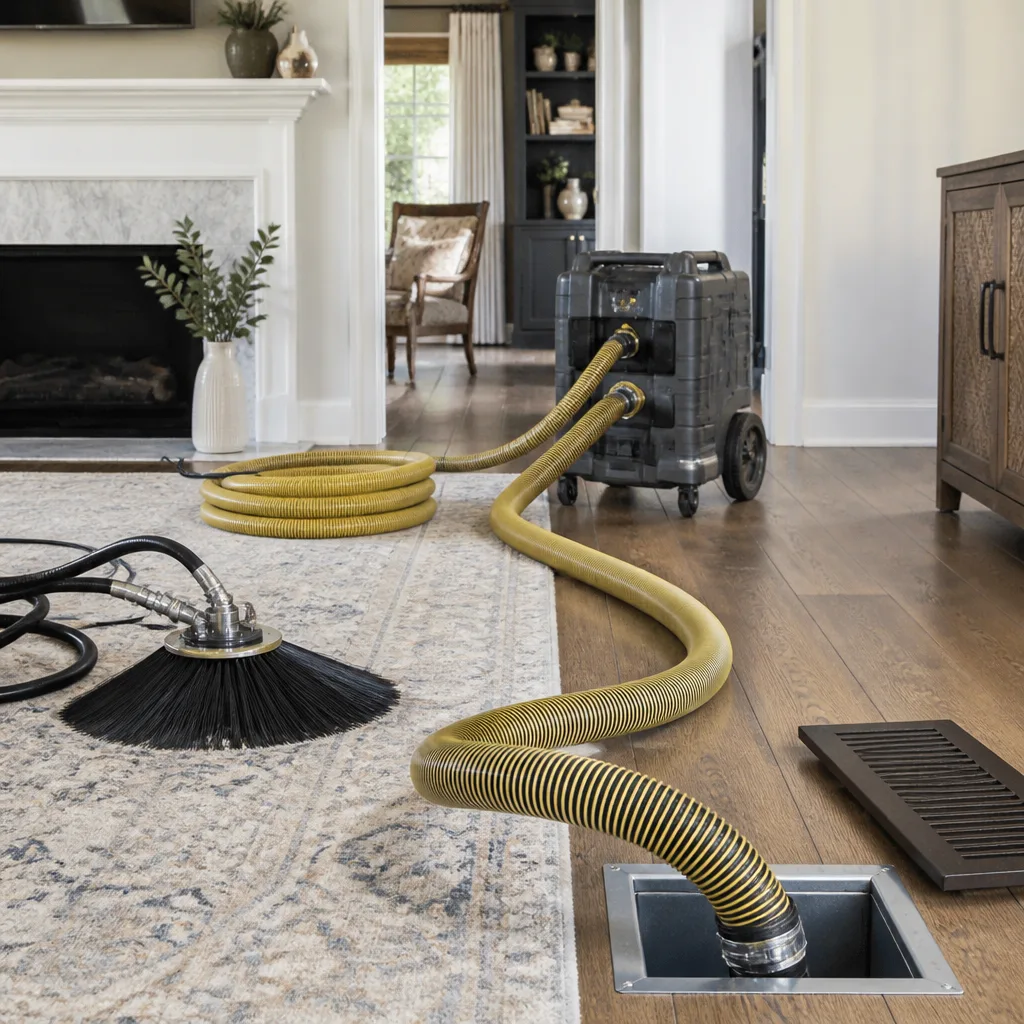 Whole-home duct cleaning
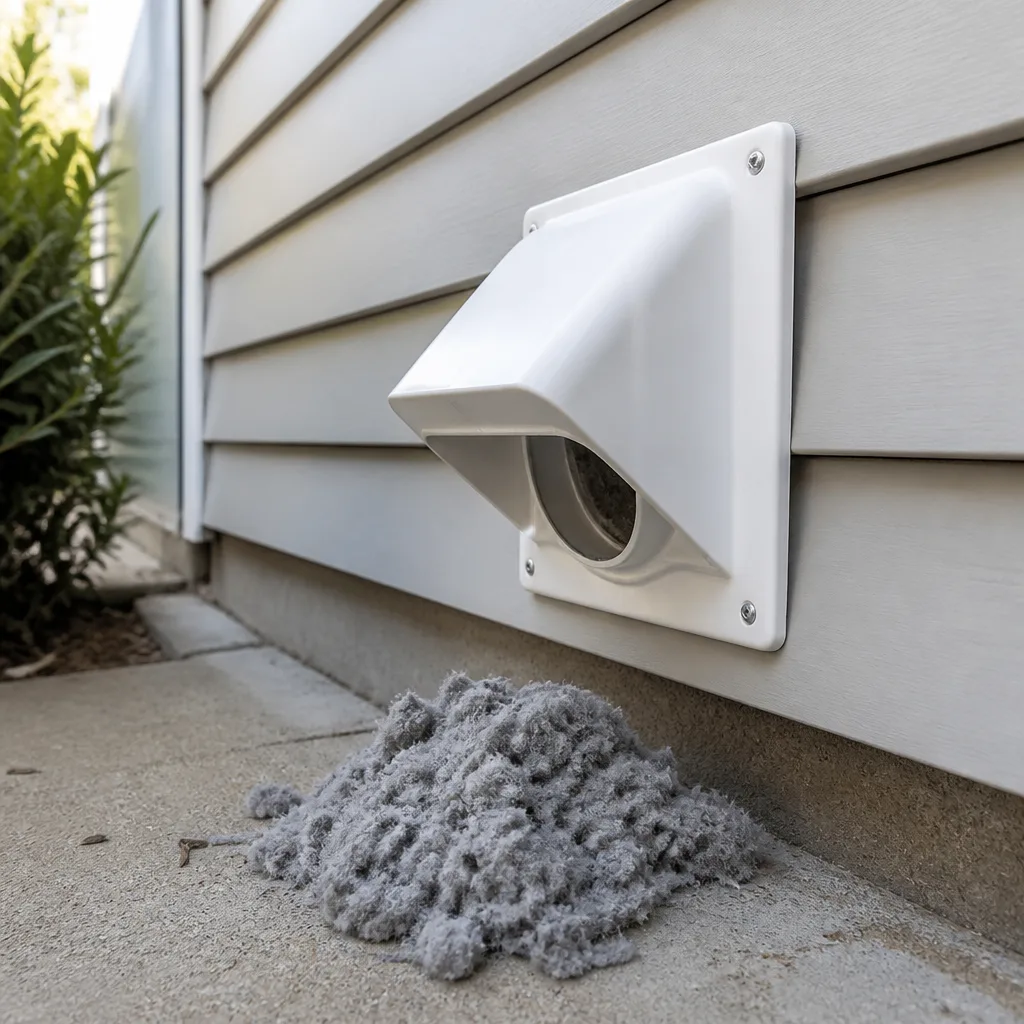 Dryer vent cleaning
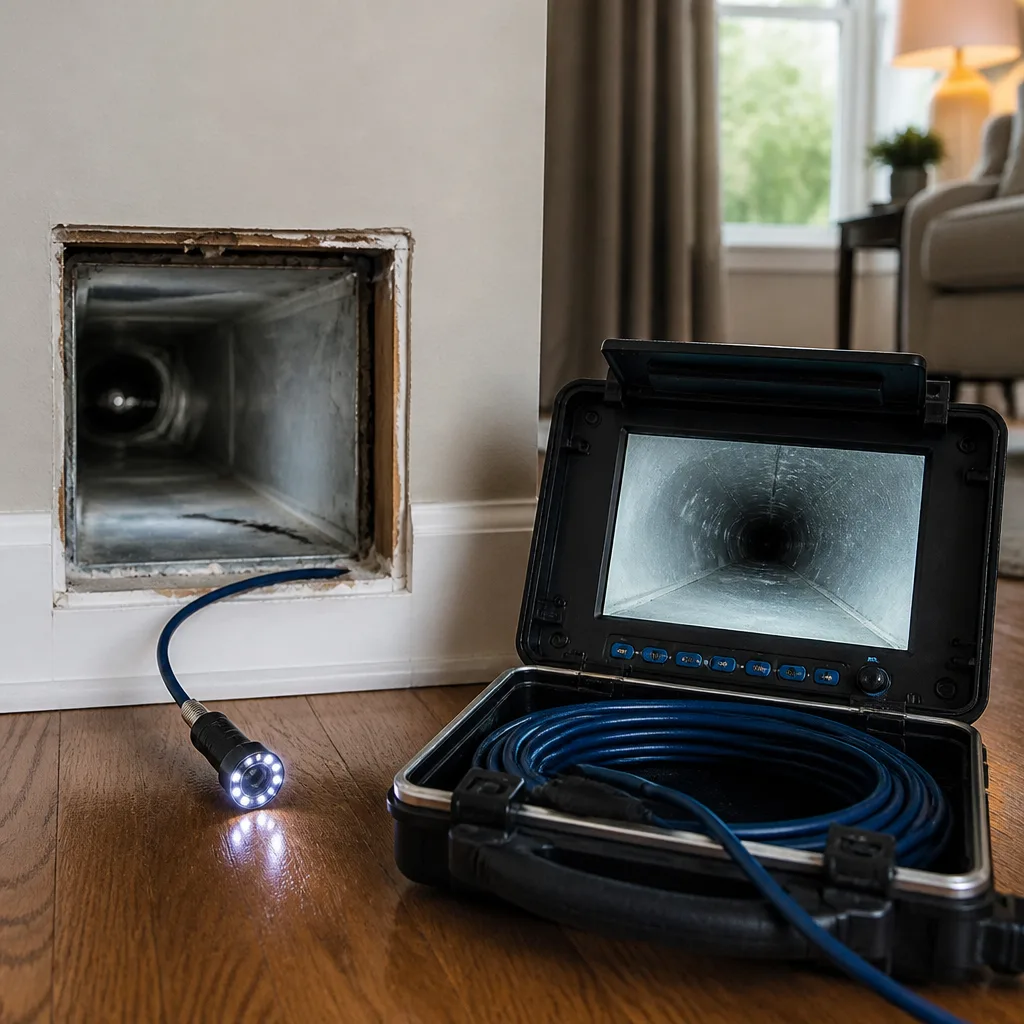 Camera inspection
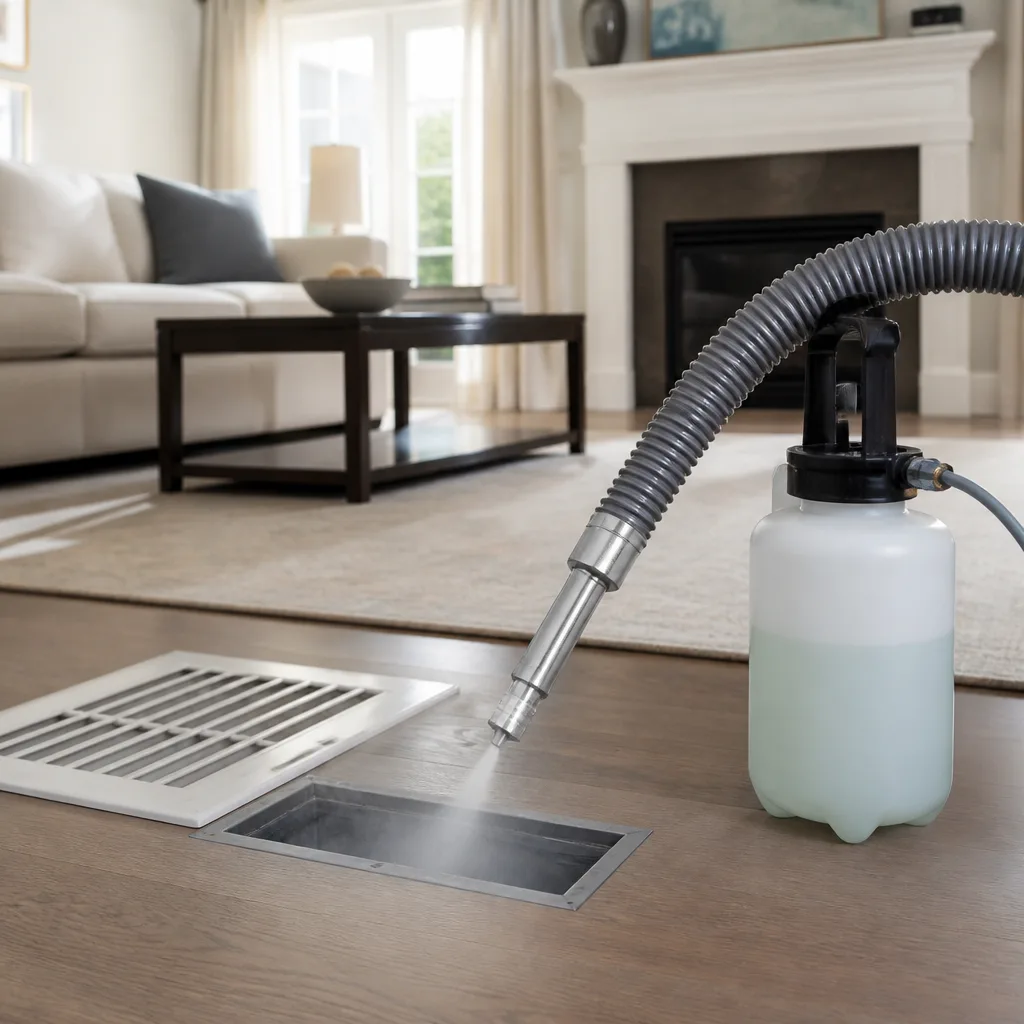 Sanitizing & deodorizing
Whole-system duct and dryer vent check with before-and-after photos - you see exactly what came out of your vents
That "$99 whole-house special" is a bait ad - the real number appears once they are in your hallway, or the "clean" is a shop-vac at the register. We photograph the inside of your ducts before and after instead.
Air Duct Cleaning Warning Signs: A Yorba Linda Homeowner’s Reference Guide
When the back bedroom runs hot and the living room stays cold, most Yorba Linda homeowners call an HVAC technician to look at the unit. That’s usually the wrong first call. In our experience, temperature complaints that show up room by room trace back to the duct system far more often than they do to an undersized or failing air conditioner, and an equipment tech who only checks refrigerant charge and compressor amps will bill you for a tune-up that never touches the real problem. The ducts are where the air actually travels, and they fail quietly: a leaking joint here, a crushed flex run there, a filter loading up with drywall dust after a kitchen remodel. This guide walks through the warning signs that point to ducts rather than equipment, teaches you a few checks you can run yourself, and explains when the answer is cleaning versus repair. Everything below is written for Yorba Linda homes specifically.
Quick Answer
The most reliable air duct cleaning warning signs in a Yorba Linda home are a visible dust ring or dark staining at the supply registers, musty or stale odors that appear only when the system runs, and rooms that never reach temperature no matter how long the system has been on. Those three together point to duct contamination, leakage or blockage rather than an equipment failure. If you also see debris falling from a register or a run of flex duct that’s collapsed, you’re looking at a repair need, not just a cleaning.
Styles & brands we work with
- Whole-home duct cleaning
- Dryer vent cleaning
- Camera inspection
- Sanitizing & deodorizing
Table of Contents
- Visual Warning Signs at Your Registers
- Airflow Diagnostics You Can Run Yourself
- Odor Identification: What Each Smell Implicates
- Post-Renovation Warning Signs and the 90-Day Window
- When the Signs Point to Duct Repair, Not Cleaning
- Why Southern California Seasons Hide the Problem
- What a Professional Duct Assessment Actually Involves
- Common Mistakes to Avoid
Visual Warning Signs at Your Registers
The registers are your easiest diagnostic tool, and most homeowners walk past them every day without looking. Pull the grille off a supply register in Yorba Linda and shine a light down the throat of the duct. What’s on the interior surface tells you what kind of problem you have.
A uniform, even film of grey or tan dust on the duct interior is normal particulate accumulation. Every home has it to some degree, and it builds up slowly. What you’re looking for is a pattern that differs from that baseline.
- Black or dark green spotting, especially near the register boot: that color pattern is your first clue to mold-adjacent growth, meaning moisture is present somewhere in the run. Ductwork running through unconditioned space or near a bathroom exhaust can pick up humidity and hold it.
- Streaking away from the register mouth: streaks suggest air is escaping around a loose boot or a poorly sealed collar before it ever reaches the room, pulling dust-laden air from the wall cavity with it.
- A fuzzy grey border around the grille face: that’s the supply side pulling from a dusty return or from a filter that hasn’t been seating correctly.
- Debris falling when you tap the duct: dried crust, chunks, or fibrous fibers dropping onto the grille mean the interior liner is degrading or construction debris was never cleared out.
- Rust traces on metal duct or on the register hardware: a sign of moisture that never should have entered the system.
Look at all of them, not just the worst one. A single dark register could be a leak in that run. Dark staining at every supply register in a Yorba Linda home points to contamination originating at the air handler or in the return plenum, which changes the scope of the work entirely. Our technicians have up to 12 years of experience reading these patterns, and the difference between a localized run issue and a whole-system one determines whether you’re looking at a targeted cleaning or a full-system approach.
When you’re ready to have a professional look, our air duct cleaning assessment starts with exactly this walkthrough, register by register.
Airflow Diagnostics You Can Run Yourself
You don’t need instruments to test whether your ducts are delivering the air your system produces. Three simple checks will tell you a lot before anyone knocks on your door.
- The tissue test. Hold a single-ply tissue against a supply register while the system runs. It should flutter toward the room with visible force. If it barely moves, or if a nearby register has noticeably stronger airflow than another, you have a balance or blockage problem in at least one run.
- Room-to-room temperature differential. Use a cheap digital thermometer (or a cooking thermometer) and check the same spot in each room after the system has run steadily for at least 20 minutes. A five-to-eight degree spread between the best and worst room in a Yorba Linda home is a strong signal of duct leakage or a disconnected run, not an undersized unit.
- The return air suction check. Hold the tissue against the return grille – it should be pulled firmly against the metal. If suction is weak, or varies wildly depending on which interior door is open, the return side of your system is starved.
Do these three checks on the same afternoon and write down what you find. A strong supply but weak return, or a strong return but uneven supplies, points to two very different problems. Our technicians have up to 12 years of experience and can tell you which side of the system is causing the trouble from those results alone.
For a full HVAC-cleaning assessment of the air handler, coil and blower alongside the ducts, our HVAC cleaning covers the whole air pathway rather than just what you can see.
Odor Identification: What Each Smell Implicates
Smell is often the first sense to catch a duct problem, and each type of odor points at a different culprit. If the smell disappears when the system is off and returns the moment it starts, the source is in the ducts, not the room.
Musty or “wet basement” smell
Moisture and biological growth, usually in an area of ductwork that stays humid – a run through a poorly ventilated attic space, a leaking boot near a bathroom exhaust, or an air handler that’s collecting condensation. In Yorba Linda’s dry summers, standing moisture inside a duct is a real anomaly and points to a leak or a blocked drip pan rather than ambient humidity.
Burning or hot-dust smell
A hot-dust odor is normal during the first system run of the heating season – dust on the heat exchanger burning off. A persistent burning or electrical smell with the system running is not normal and should be checked by a professional immediately. On the cooling side, a burning smell can also indicate debris buildup on the blower or an overheating motor.
Chemical or “new appliance” smell
Fresh drywall or paint fumes pulled into the return during or after a remodel. If the smell persists more than a few weeks after construction ends, the return and supply are circulating the off-gassing from stored debris. The system works as designed – it just needs the source cleared.
Vermin smell (rodent, ammonia, or sweet-urine)
This is the most serious. Rodents nesting in ductwork, or a rodent that has died in the run, leaves a smell that no filter will clear. dryer vent cleaning – adjacent pieces of this problem are the same: rodents enter ductwork for the same reason they enter lint-choked dryer lines, because there is shelter and warmth. A duct system with vermin intrusion usually needs both cleaning and repair.
When we assess an odor complaint in Yorba Linda, we use equipment from Nikro and Rotobrush to open and clear the affected runs, then treat the system with Guardsman-grade sanitizers to address microbial and allergen buildup at the source.
Post-Renovation Warning Signs and the 90-Day Window
Remodeling is the single biggest trigger for duct contamination in Yorba Linda homes, and the worst time to ignore it is the three months immediately after the last contractor walks out. Here’s why.
Drywall dust behaves differently from the ordinary household dust your filter is designed to capture. When contractors cut, sand and finish drywall with the HVAC system running, or with the system off but still connected, the fine particulates settle into every duct run. The system gets turned back on at final walkthrough and blows that load into the living space – or, if the filter catches most of it, it loads the filter and the blower wheel instead.
Watch for these signs in the 90-day window after any remodel:
- White powder in the supply register throat. Drywall dust is unmistakable, and if you see it in a supply run, the return side is carrying it too.
- Filter that loads within two or three weeks. A filter that used to last months and is suddenly fully loaded in a couple of weeks is capturing construction dust that didn’t exist a month ago.
- Sanding or gypsum smell that never clears. Even after airing out the rooms, if the smell reappears when the system runs, the ducts are holding the load.
- White staining on the blower wheel or coil face. If you can see the air handler, a chalky deposit on metal is a sign that dust has already moved past the filter.
Our advice to Yorka Linda homeowners ending a renovation: schedule a professional cleaning inside that 90-day window, before the debris sets into the duct liner. In our experience, dust that’s allowed to sit through a wet season can cake onto flex duct liner and become much harder to remove without damaging the material. When we service a post-renovation system, we use Abatement Technologies filtration equipment during the work to contain the load and keep it out of your living spaces.
If the renovation involved roof work or new HVAC equipment, the same 90-day window applies to the new install’s return-side dust load. It’s a good moment to review our core service at Yorba Linda Air Duct Cleaning Pros.
When the Signs Point to Duct Repair, Not Cleaning
Here’s the advice that distinguishes this guide from a generic cleaning pitch: not every warning sign is a cleaning need. Some signs say the ductwork itself is broken, and cleaning a broken duct just redistributes the problem. If you see any of the following, the answer isn’t a vacuum – it’s repair and sealing.
Collapsed or crushed flex duct
Flex duct is corrugated plastic over a wire helix, and it can crush if it’s been stepped on in the attic, pinched under a joist, or kinked too tightly around a corner. A crushed run loses most of its cross-section and delivers a fraction of the airflow. In Yorba Linda homes where the attic is accessible, this is a common find along runs that a contractor compressed during an unrelated repair.
Disconnected trunk lines
If a main trunk has separated from a branch collar, the system is blowing cooled or heated air into the attic or crawlspace while the room it served gets nothing. That’s the room that never reaches temperature no matter how long the system runs.
Vermin intrusion indicators
Torn interior liner, droppings, or chewing marks at a flexible joint are all signs that an animal has been inside the duct. Cleaning alone won’t fix the entry point – the run needs to be sealed or replaced first, or the animal comes back.
Visible air leaks at joints and boots
If you can feel air escaping at a joint or around a register boot, the system is losing capacity at that point. Sealing the leak is part of the job.
This is where a full-system approach matters. Most duct cleaning companies don’t offer repair and sealing – they only clean what’s there. We handle both, and we don’t leave a home with a collapsed run after a visit. Duct Repair & Sealing is a distinct service on our menu for exactly this reason.
Why Southern California Seasons Hide the Problem
Yorba Linda’s climate makes duct symptoms harder to spot, not easier. Winters are mild, so a home might run the heater for only a few weeks and never really stress the system. The result is that a leak that would show up in a colder climate as a cold room or a high heating bill stays quiet for most of the year.
The seasons that do matter are the two extremes:
- Late summer. The air conditioner runs long hours, and that’s when temperature complaints peak. A back bedroom that runs five degrees warm in August is telling you something the same room never says in March.
- First heating run of the year. The hot-dust smell that appears the first time the heater fires each year is normal. Anything that persists past the first afternoon is not.
- Santa Ana wind days. When dry, dusty wind drives fine particulate into every opening in a home, the duct system pulls a concentrated load through the return if a window or door has been left open. That’s also when a compromised duct liner will reveal itself with visible debris at the registers.
Our point is not that Yorba Linda is a harder place to maintain a duct system – it’s that the symptoms express themselves differently. Homeowners here need to know what to watch for in August and September, not January and February.
What a Professional Duct Assessment Actually Involves
A serious assessment is a walkthrough and a camera inspection, not a sales pitch. Here’s what a proper visit looks like so you can recognize one when you see it.
- Register-by-register visual inspection. Every supply and return is opened and its duct interior examined. That’s where the mold-adjacent and debris signs get logged.
- Airflow and static pressure measurement. A technician measures suction at the return and pressure drop across the filter, which tells you how much of the airflow problem is duct-related versus equipment-related.
- Access and camera inspection of the main trunk and air handler. A camera run through the trunk line reveals collapsed flex runs, disconnected collars, and debris loads that aren’t visible from the registers.
- Written scope with a decision tree. The assessment should end with a written scope that separates cleaning from repair, with before-and-after photos of your own ducts so you know the equipment actually ran and the debris actually came out.
- Sanitizing recommendation where the assessment calls for it. Not every home needs it. Where there’s mold-adjacent growth or allergen buildup, we use Guardsman-grade sanitizing treatments that address the biological layer after the mechanical cleaning is done.
- A clear answer on duct sealing if repair is needed. Duct Repair & Sealing gets done in the same visit, so you’re not scheduling a second company to fix what the first one cleaned.
We use Rotobrush rotary brush systems for the mechanical cleaning and Nikro extraction equipment for the air handling – the same class of equipment certified specialists use, not a shop-vac. That matters because a consumer-grade vacuum source can’t generate the airflow needed to actually lift debris out of a duct run; it will only disturb the surface layer.
Common Mistakes to Avoid
- Calling the HVAC technician first for every temperature complaint. A back bedroom that runs warm while the front rooms are fine is a duct problem more often than an equipment problem, and a tune-up won’t touch it. Ask the tech to measure static pressure and register airflow, not just refrigerant charge.
- Running the system during a remodel. Drywall dust drawn into the supply runs during sanding and finishing is the single biggest source of post-renovation duct debris in Yorba Linda homes. Seal the supply registers and shut the system off during the sanding phase.
- Judging the job by the price alone. A low estimate that turns into a larger invoice once the technician is on site, or a per-vent price that ignores what’s inside the runs, is the industry’s common bait-and-switch. Ask for one flat price per system, agreed before work starts.
- Assuming cleaning fixes a collapsed duct. Cleaning a broken run won’t restore airflow, and it can distribute debris further into a system that’s already compromised. Repair and sealing come first.
- Ignoring the return side. Homeowners tend to look at supply registers, but the return carries the heaviest dust load. If your return grille is loaded but your supplies look clean, the filter and the return plenum are where the work needs to happen.
- Skipping the 90-day window after construction. A post-renovation cleaning is most effective before the debris sets into flex duct liner, and most Yorba Linda homes hit that window around the time the final walkthrough happens.
- Treating a periodic cleaning as annual maintenance. Duct systems don’t have a fixed service interval. Depending on filters, pets, renovations and vermin exposure, the right interval for your home may be much longer or much shorter than a neighbor’s. Base it on what your signs tell you, not on a schedule someone sells you.
See the difference
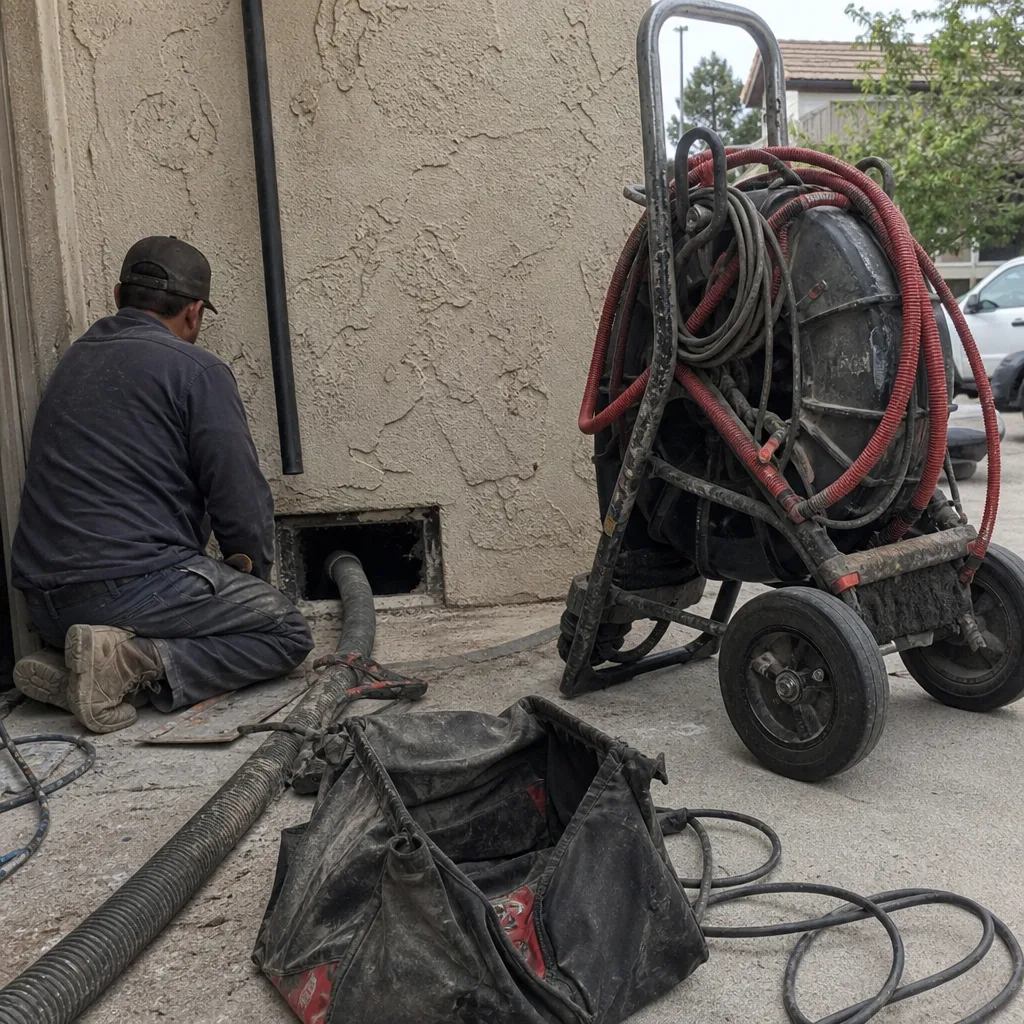 Before
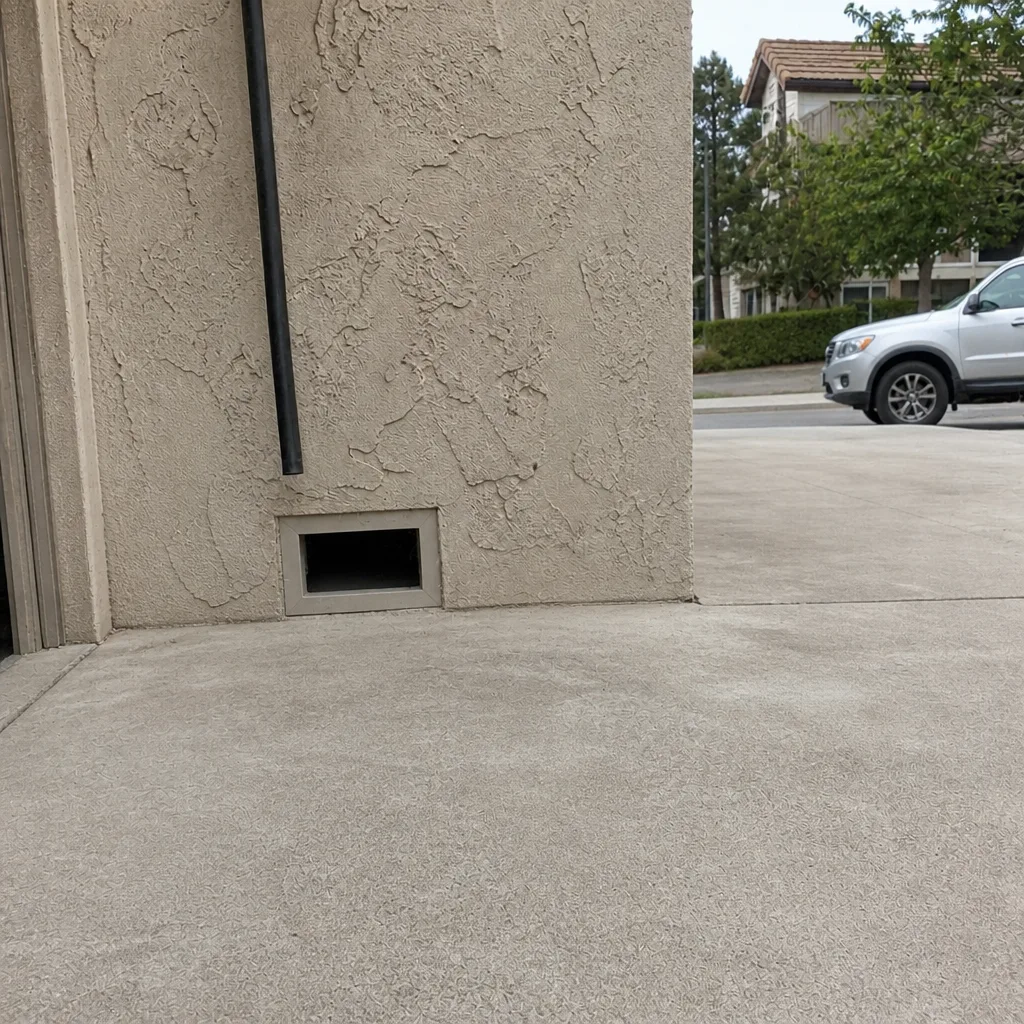 After
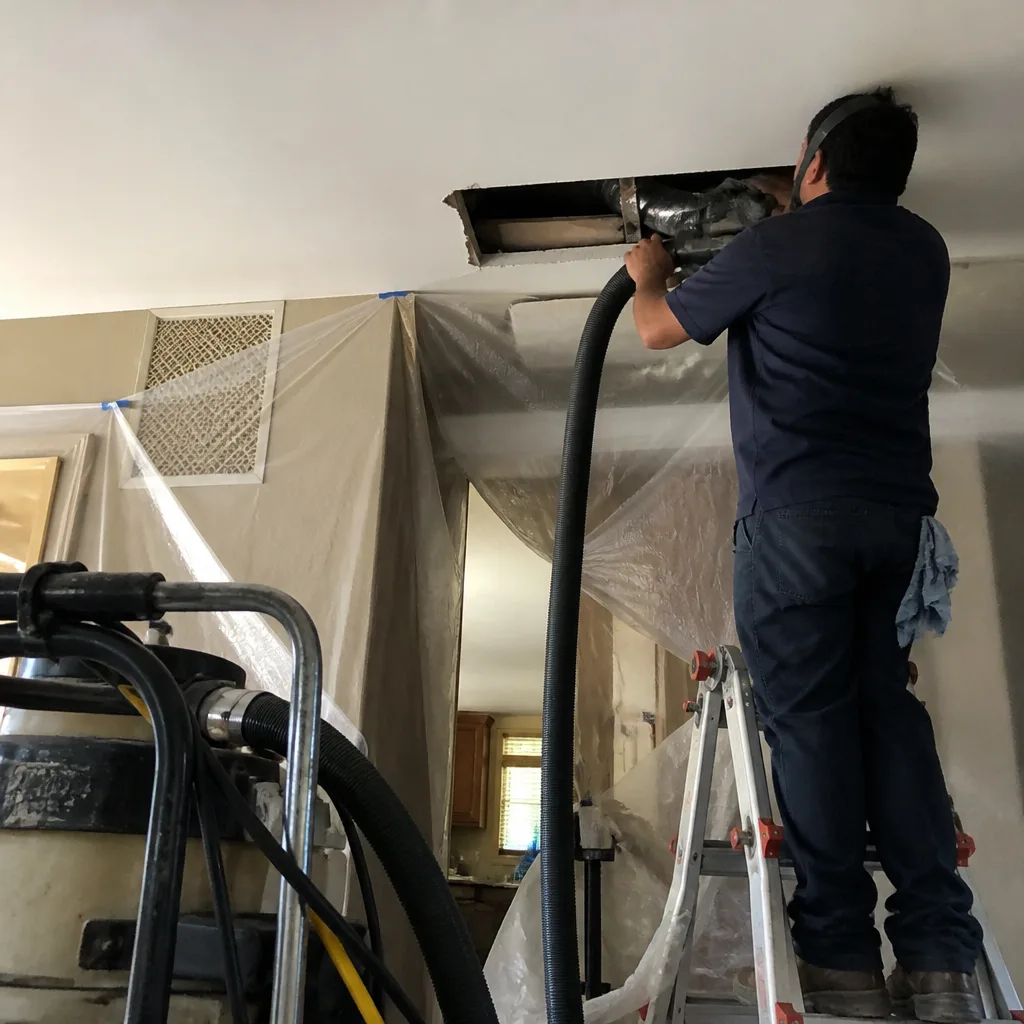 Before
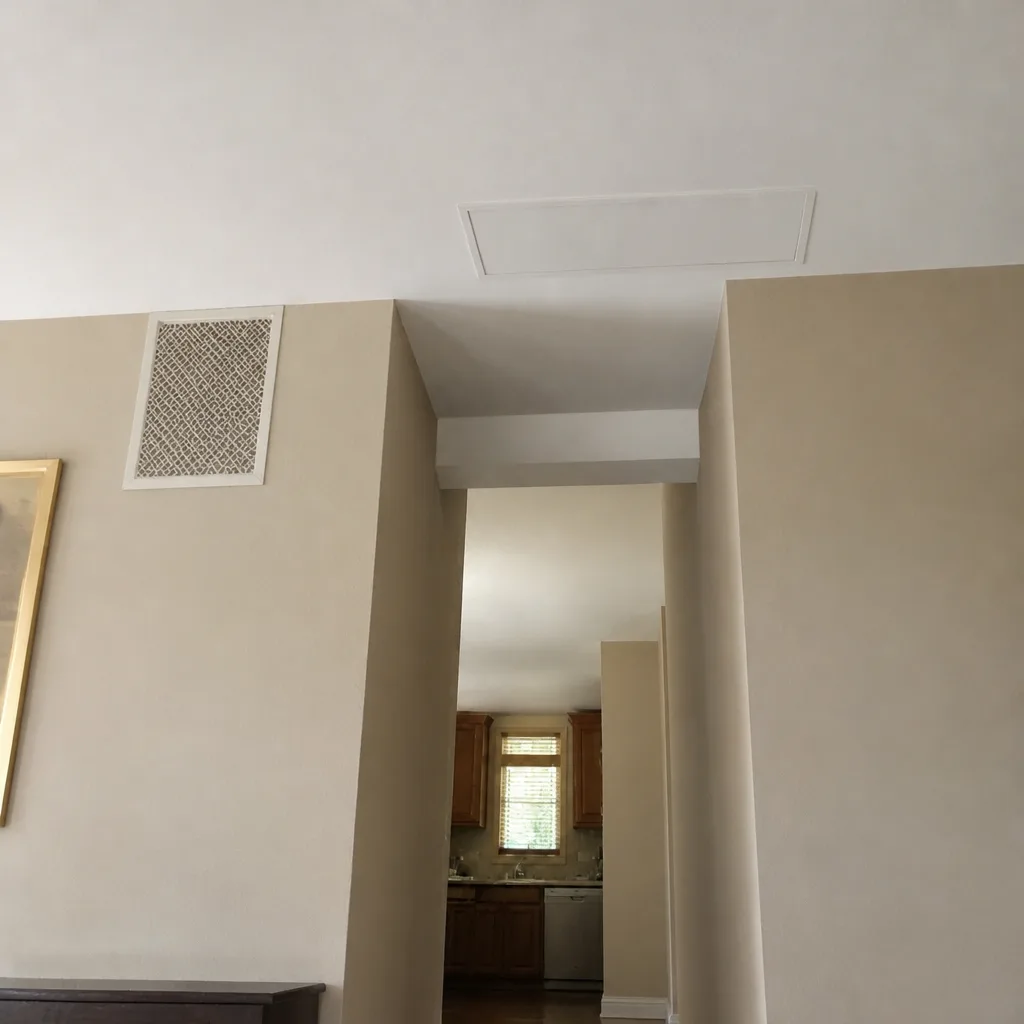 After
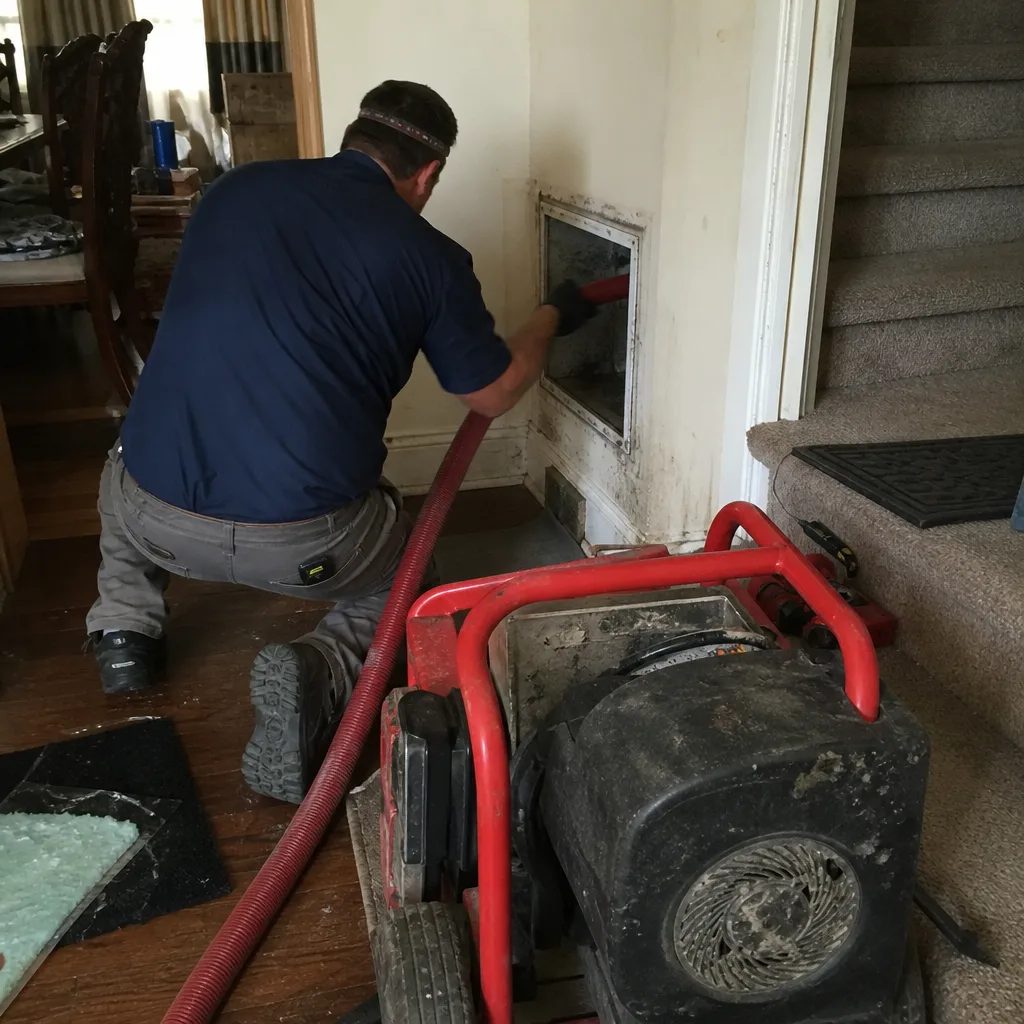 Before
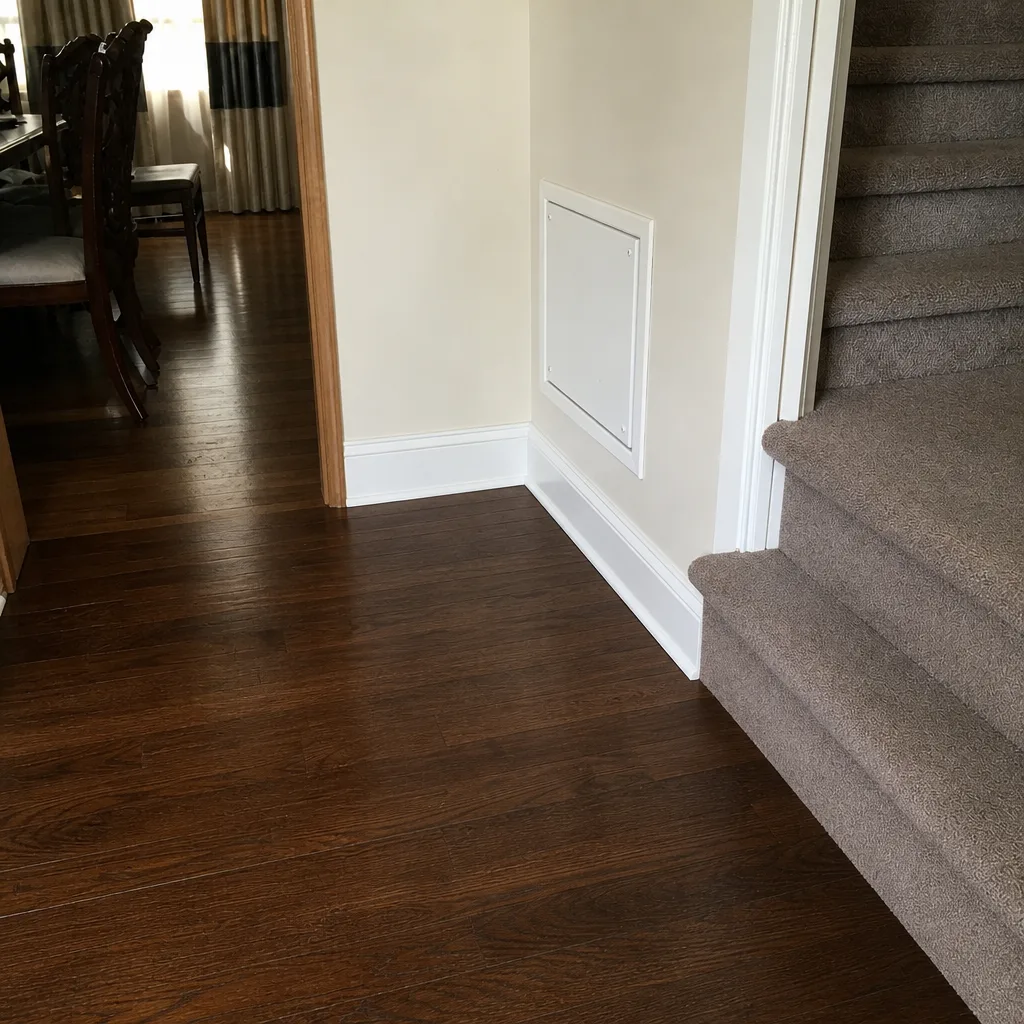 After
When to Call a Professional
Call a professional when you see dark staining or debris at more than one register, when airflow is measurably uneven between rooms, when a musty or vermin smell persists, or when the signs point to a collapsed, disconnected, or vermin-damaged run. Call sooner if the odor is burning or chemical. Also call if you’re inside the 90-day window after a renovation – post-construction debris that sits through a wet season becomes much harder to remove. Yorba Linda Air Duct Cleaning Pros offers free estimates in Yorba Linda – call (877) 523-5624. We answer 24/7. Fast dispatch from 7am to 7pm, Sunday through Friday. A written estimate, with one flat price per system agreed before work starts and before-and-after photos of your own ducts, is the standard you should expect from any visit.
Frequently Asked Questions
Every home is different, and a free estimate is the only honest way to answer for your specific system. Most quotes break down by number of registers and system type, but the flat price per system agreed before work starts is what matters – not a per-vent number quoted over the phone. Call (877) 523-5624 for an exact quote – estimates are free.
Because they’re often quoted for less work than the job requires, or they price per vent and then change the scope once the technician is on site. The common bait-and-switch is a low teaser price that becomes a far larger invoice after the technician inspects the system. Ask for the flat price per system in writing before work starts. Call (877) 523-5624 for an exact quote – estimates are free.
Ask for before-and-after photos of your own ducts taken during the service, and ask which equipment was used. Professional-grade machines from Rotobrush and Nikro generate measurable extraction airflow a consumer vacuum can’t match, and the photos are the proof. Call (877) 523-5624 for an exact quote – estimates are free.
There is no fixed schedule. Ducts don’t need cleaning on an annual timer; they need cleaning based on what’s actually inside them, which depends on pets, filters, renovations, and vermin exposure. Do a register-by-register inspection once a year, and if you see the warning signs in this guide, that’s your signal. Call (877) 523-5624 for an exact quote – estimates are free.
Two tests separate them cleanly. First, check whether the temperature complaint is uniform across the home or concentrated in specific rooms – if it’s room-by-room, it’s almost always duct-related. Second, check the tissue test at the supply registers; weak airflow at some registers and strong at others is a distribution problem, not a capacity problem. An equipment tech should measure static pressure to be sure. Call (877) 523-5624 for an exact quote – estimates are free.
Close the supply registers and turn off the system during the sanding phase, and change the filter as soon as the last contractor leaves. Then schedule a professional assessment inside the 90-day window, before drywall dust sets into the duct liner. Wait too long and the removal is harder on the duct material. Call (877) 523-5624 for an exact quote – estimates are free.
The Bottom Line
Most duct problems in Yorba Linda show up as something other than a duct complaint. They look like a hot back bedroom, a musty smell that comes and goes with the thermostat, or a filter that suddenly needs replacing every few weeks. The register, the tissue test, and the room-to-room thermometer are the three diagnostic tools that point you at the ducts instead of the equipment. When the signs are visible debris, uneven airflow, persistent odor, or a recent renovation, cleaning solves it – with professional-grade equipment, before-and-after photos, and one flat price per system. When the signs are a collapsed run, a disconnected trunk, or vermin damage, repair and sealing come first. Either way, the goal is the same: a complete job, not a corner cut.
Call (877) 523-5624 for a free estimate. We answer 24/7. Fast dispatch from 7am to 7pm, Sunday through Friday. One flat price per system, agreed before work starts, and before-and-after photos of your own ducts.
Written by the team at Yorba Linda Air Duct Cleaning Pros.